

About FNET/GridEye
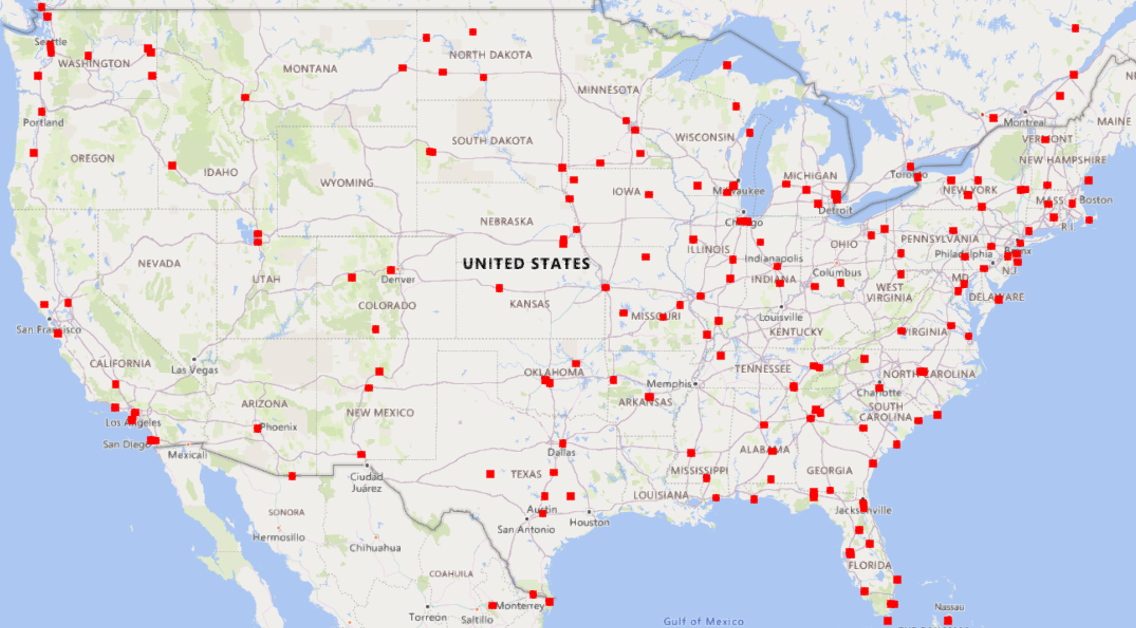
Operated by the Power Information Technology Laboratory at the University of Tennessee, FNET/GridEye is a low-cost, quickly deployable GPS-synchronized wide-area frequency measurement network. High dynamic accuracy Frequency Disturbance Recorders (FDRs) are used to measure the frequency, phase angle, and voltage of the power system at ordinary 120 V outlets. The measurement data are continuously transmitted via the Internet to the FNET/GridEye servers hosted at the University of Tennessee and Virginia Tech. The Power IT Lab has developed several applications which use the FNET/GridEye data to study the power system, including:
- Event detection and location
- Oscillation detection
- Animations of frequency and angle perturbations
- Integration of renewables into the power grid
- Detection of system breakup or islanding
- Providing grid control input signals
- Prediction of grid instability and reduction of blackouts
Video: How to Install Your Frequency Disturbance Recorder
FNET/GridEye Consortium
The FNET/GridEye Industry Consortium was formed to pool resources to support FNET/GridEye operations and
research. Among other benefits, Consortium member companies have access to automatic power grid event
alert e-mails. This e-mail includes event size (MW) and location information whenever possible, as well
as event data plots. Members also have access to the FNET/GridEye event website, which documents the
most recent major events.
Contact Professor Yilu Liu (liu@utk.edu) if you would like to learn more about the FNET/GridEye
Industry Consortium.
 FNET/GridEye Application Research

- Generator trip detection, location, and size estimation
- Oscillation detection and location
- Large load drop detection and location
- Post-disturbance scenario reconstruction
- System models validation
- Oscillation damping control
- Interconnection and local inertia monitoring
- Wide-area frequency and angle visualization and graphic display
- Observe propagation of frequency disturbances as electromechanical waves
Interested in Hosting an FDR?
FNET/GridEye is seeking universities, schools, research institutions, utilities, businesses, and qualified individual hosts to support the expansion and continued operation of its global frequency-monitoring network.
An FDR is a compact, GPS-synchronized measurement device that records local power-system frequency, voltage, and phase angle from a standard electrical outlet. A suitable host site typically provides:
- A secure indoor location
- A reliable Internet connection
- Access to a standard electrical outlet
- Adequate GPS reception, usually near a window with a clear view of the sky
- Willingness to keep the unit connected and operational
Locations Where FDR Hosts Are Needed
Select a region below to view cities where new or replacement FDR hosts are currently needed. Only the city and state, province, or country are shown. These planning lists may change as network conditions and host availability evolve.
- Anchorage, AK
- Fairbanks, AK
- Juneau, AK
- Decatur, AL
- El Dorado, AR
- Jonesboro, AR
- Benson, AZ
- Buckeye, AZ
- Flagstaff, AZ
- Page, AZ
- Yuma, AZ
- Blythe, CA
- Fresno, CA
- Morro Bay, CA
- Ridgecrest, CA
- Craig, CO
- Fort Collins, CO
- Jacksonville, FL
- Augusta, GA
- Urban Honolulu, HI
- Idaho Falls, ID
- Twin Falls, ID
- Evansville, IN
- Manhattan, KS
- Wichita, KS
- Hopkinsville, KY
- Louisville, KY
- Central, LA
- Lake Charles, LA
- Shreveport, LA
- Bangor, ME
- Duluth, MN
- St. Joseph, MO
- Meridian, MS
- Southaven, MS
- Vicksburg, MS
- Bozeman, MT
- Great Falls, MT
- Missoula, MT
- Wilmington, NC
- Bismarck, ND
- Grand Forks, ND
- Williston, ND
- Grand Island, NE
- North Platte, NE
- Farmington, NM
- Las Cruces, NM
- Roswell, NM
- Elko, NV
- Buffalo, NY
- Broken Arrow, OK
- Medford, OR
- Warren, PA
- Columbia, SC
- Hendersonville, TN
- Memphis, TN
- Amarillo, TX
- Bay City, TX
- Corpus Christi, TX
- El Paso, TX
- Henderson, TX
- Houston, TX
- Laredo, TX
- Mexia, TX
- Odessa, TX
- Paris, TX
- Sweetwater, TX
- Temple, TX
- St. George, UT
- Covington, VA
- Virginia Beach, VA
- Burlington, VT
- Plover, WI
- Charleston, WV
- Morgantown, WV
- Casper, WY
- Cheyenne, WY
- Rock Springs, WY
Locations outside the currently listed priority areas are also welcome to contact us.